We all know the saying, “Prevention is better than cure” It’s not just a cliché. The truth is, most of the infections that knock people down don’t just appear from nowhere; they spread. And the way they spread is so simple that many of us don’t even realize we’re exposing ourselves every single day.
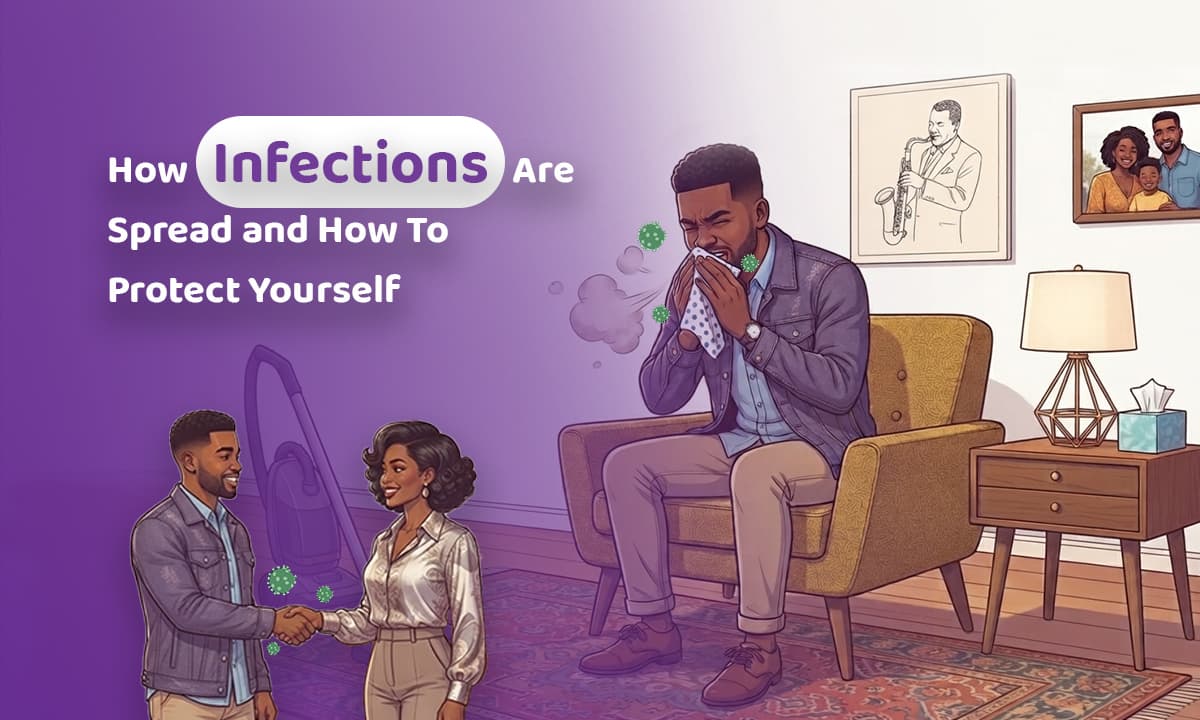
Think about it: you shake someone’s hand, touch your face, eat without washing properly, or even sit too close to someone coughing endlessly in public transport. That’s how infections travel, quietly, like an unwanted visitor.
How Infections Spread
- Direct contact – Touching, kissing, sex, or even handshakes with an infected person.
- Airborne – Coughing, sneezing, or even talking can release tiny droplets that carry infection.
- Contaminated surfaces – Door handles, ATMs, shared phones, keyboards, or even money can carry germs.
- Food and water – Poorly cooked food, dirty water, or unhygienic cooking conditions.
- Insects and animals – Mosquitoes, rats, and even pets can transfer infections.
- Medical equipment or needles – Sharing needles or poorly sterilized tools in clinics or salons.
Now, the scary part is that the infection doesn’t announce itself immediately. Sometimes it hides and grows inside the body until it becomes a serious issue.
Steps To Prevent Infections
- Wash your hands often with soap and water.
- Avoid touching your eyes, nose, and mouth with unclean hands.
- Cover your mouth when coughing or sneezing (and avoid people who don’t).
- Always cook food properly and drink clean water.
- Use insect repellents and keep your environment clean to deter mosquitoes and rodents.
- Don’t share sharp objects, needles, or personal items like razors.
- Practice safe sex.
- Strengthen your immune system by eating well, resting, and exercising.
At the end of the day, protecting yourself from infection is not about being paranoid; it’s about being smart. The little things you ignore daily are sometimes the biggest risk to your health.